Navigating the Currents of Native Hawaiian Health in Oregon
Community Reports prepared by Ka ʻAha Lāhui O ʻOlekona (KALO)
Aloha kākou!
Imagine for a second… a place in Oregon that is the beating heart of our community - where ‘Ohana go to learn ʻŌlelo Hawaiʻi, sing mele, and dance hula! Kupuna are being cared for by Native Hawaiian cultural practitioners. Being able to feed a kaiāulu with kalo grown from Pacific Northwest soil. What will our future be for our generation and the next seven generations?
We share this report so our ʻohana can start to advocate for their future! A vision where we are respected, can secure fair funding, and resources that we need to support our lāhui. Government systems and data charts have historically grouped us into broad categories, which leads to misrepresentation of our people and our traditional cultural values. We look at data through our own cultural lens, and this report takes a stand: our moʻolelo (stories), cultural values, and lived experiences are just as relevant as statistics.
This report shares our moʻolelo in order to change that narrative. By focusing on Native Hawaiians and Pacific Islanders in Oregon, the report honors our numbers and our authentic voices—giving our ʻohana the data needed to ensure our people are respected, consulted, and valued.
Our population is expanding, and with growth comes a need for community spaces, cultural programs, healthcare, and housing. We put this report together so we have the hard evidence to:
Show government and community leaders and policymakers just how much we're growing.
Secure fair funding and dedicated grants for our own community-led organizations.
Build programs that actually fit our cultural values and traditions.
Executive Summary
Native Hawaiians are one of the fastest-growing Indigenous populations on the continental United States, and Oregon is now home to more than 15,446 Native Hawaiians. These three reports, developed by Ka ʻAha Lāhui O ʻOlekona (KALO), the sole organization that serves the community through Native Hawaiian practices in Oregon, come together to describe the Native Hawaiian community in Oregon, the status of Native Hawaiian and Pacific Islander health in Oregon, and how the KALO community experiences the preventive healthcare system. This work is grounded in a community-based participatory research (CBPR) approach where the community shapes all products from this work. All data were reviewed by KALO’s Community Advisory Board, Kūpuna (Elder) Council, and the community before reports were shared broadly. These processes reinforce the importance of community voice in sharing its needs, priorities, and strengths, rather than relying on voices or interpretations from outside the community. We also recognize that this work is solely the peak of the mauna (mountain), with more to learn as we begin to dive deeper into the health of our community. We see these reports as a kahua (foundation) for future advocacy and efforts to raise awareness of the growing community in Oregon.
Collectively, the reports tell a story of wayfinding among a growing, displaced community that is chronically undercounted, underfunded, and underserved by systems that were not built with their people in mind. Across the three reports, the same underlying priorities recur: better, disaggregated data specifically about Native Hawaiians in Oregon; direct investment in Native Hawaiian-led organizations on the continent; extending federal trust responsibility to the majority of Native Hawaiians who now live outside Hawaiʻi; trusted, community-based navigation paired with health education; and formal recognition and funding of traditional and holistic healing practices within preventive care. Together, the reports argue that closing these gaps does not require teaching the community a new direction — it requires funders, government agencies, and health systems to invest in the direction the community has already charted.
Native Hawaiian Health in Oregon Reports
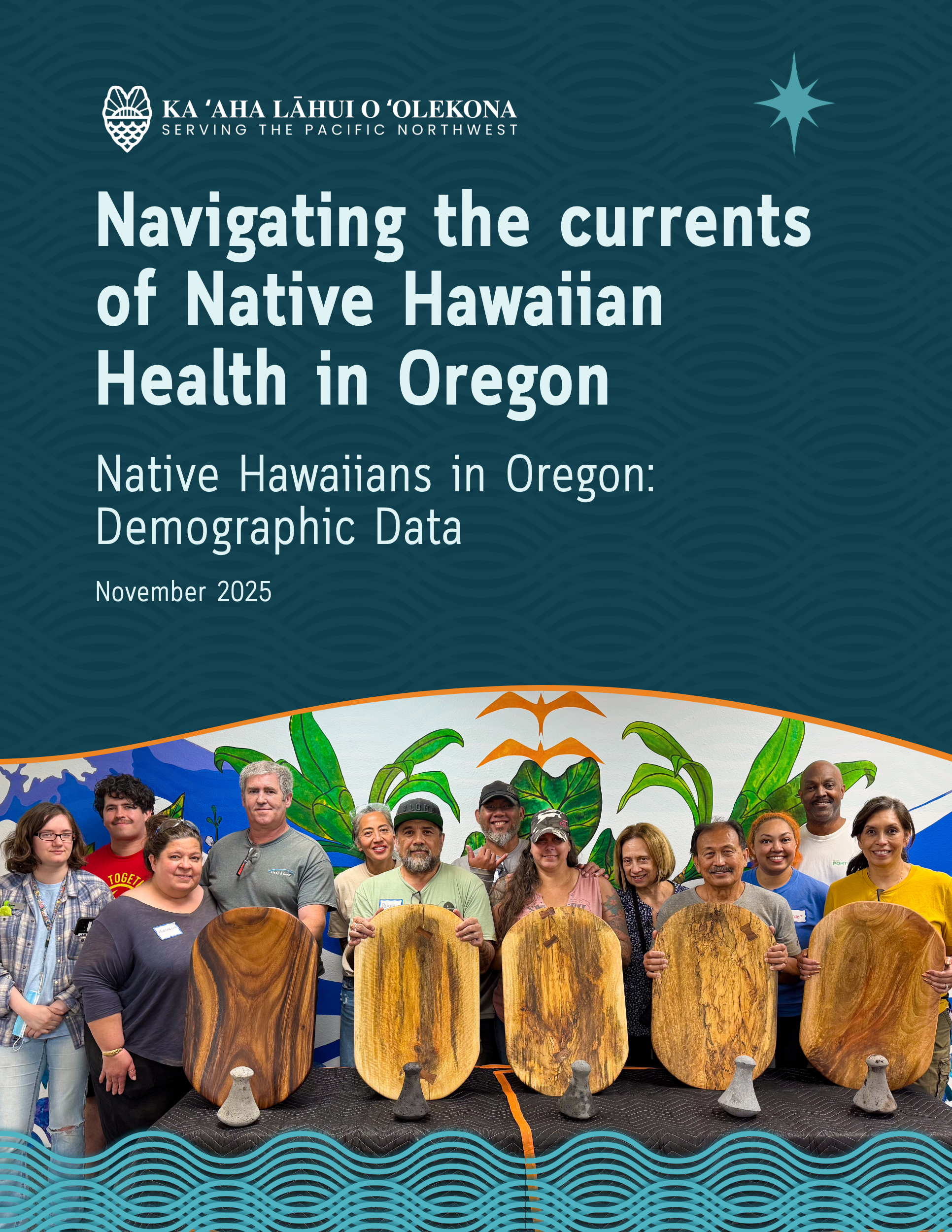
Native Hawaiians in Oregon:
Demographic Data
<15,446
Live in Oregon
25-27
Median age
~$93,000
Median household income
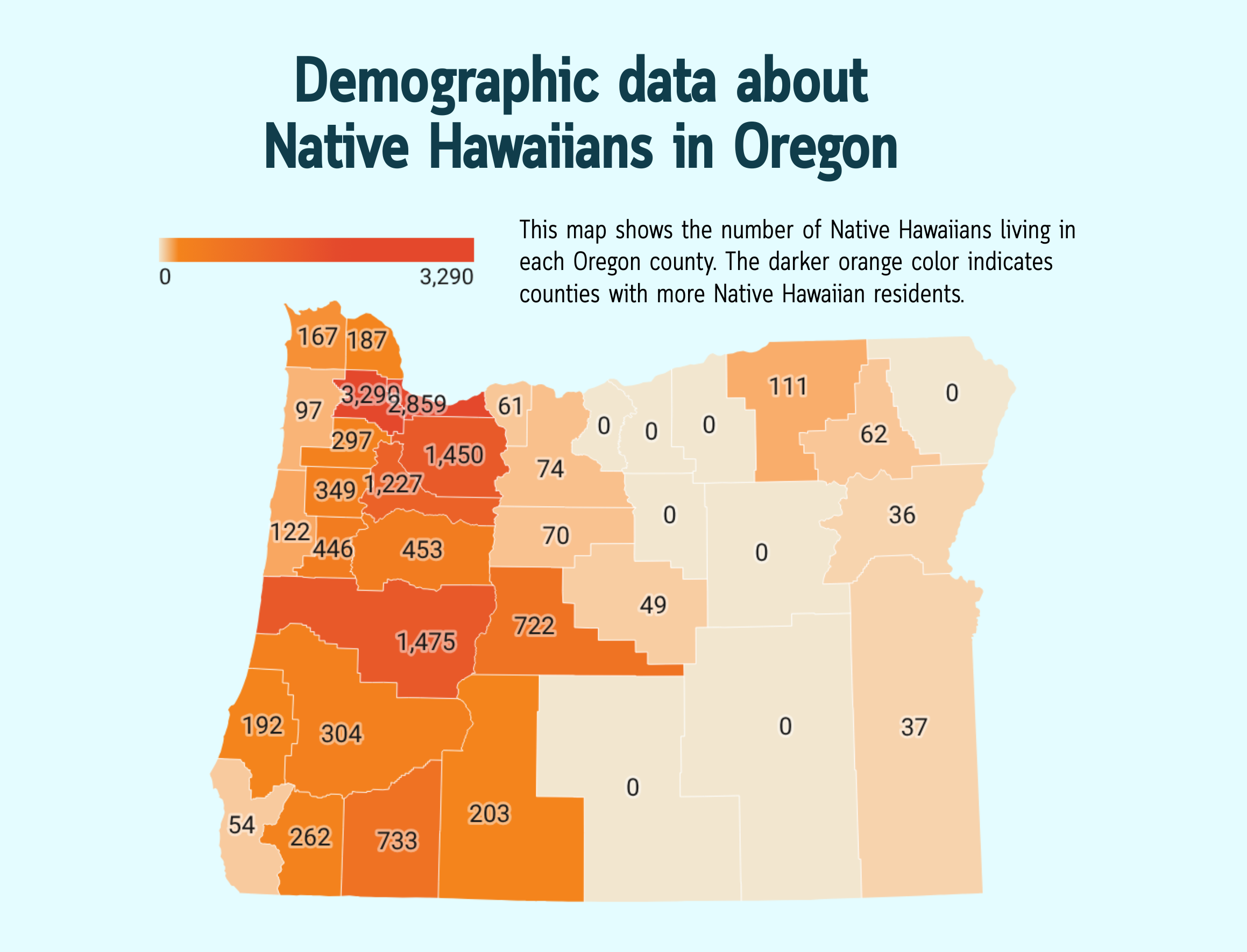
More than 15,446 Native Hawaiians live in 28 of Oregon’s 36 counties, concentrated in the Portland metro area and the Willamette Valley, and the statewide Native Hawaiian and PI population has grown more than 54% since 2010.
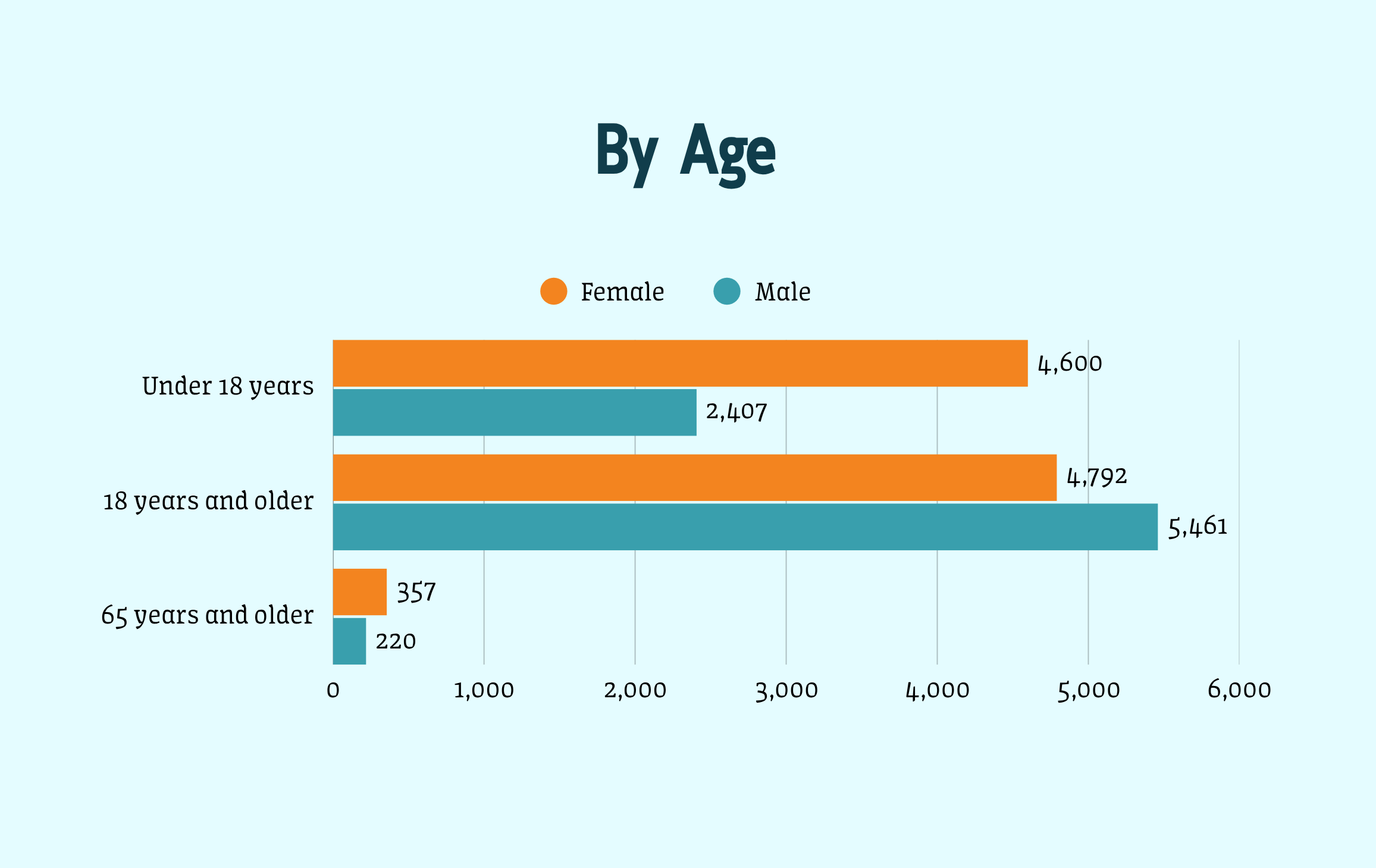
There are nearly the same number of males and females, with a median age between 25-27 years old.
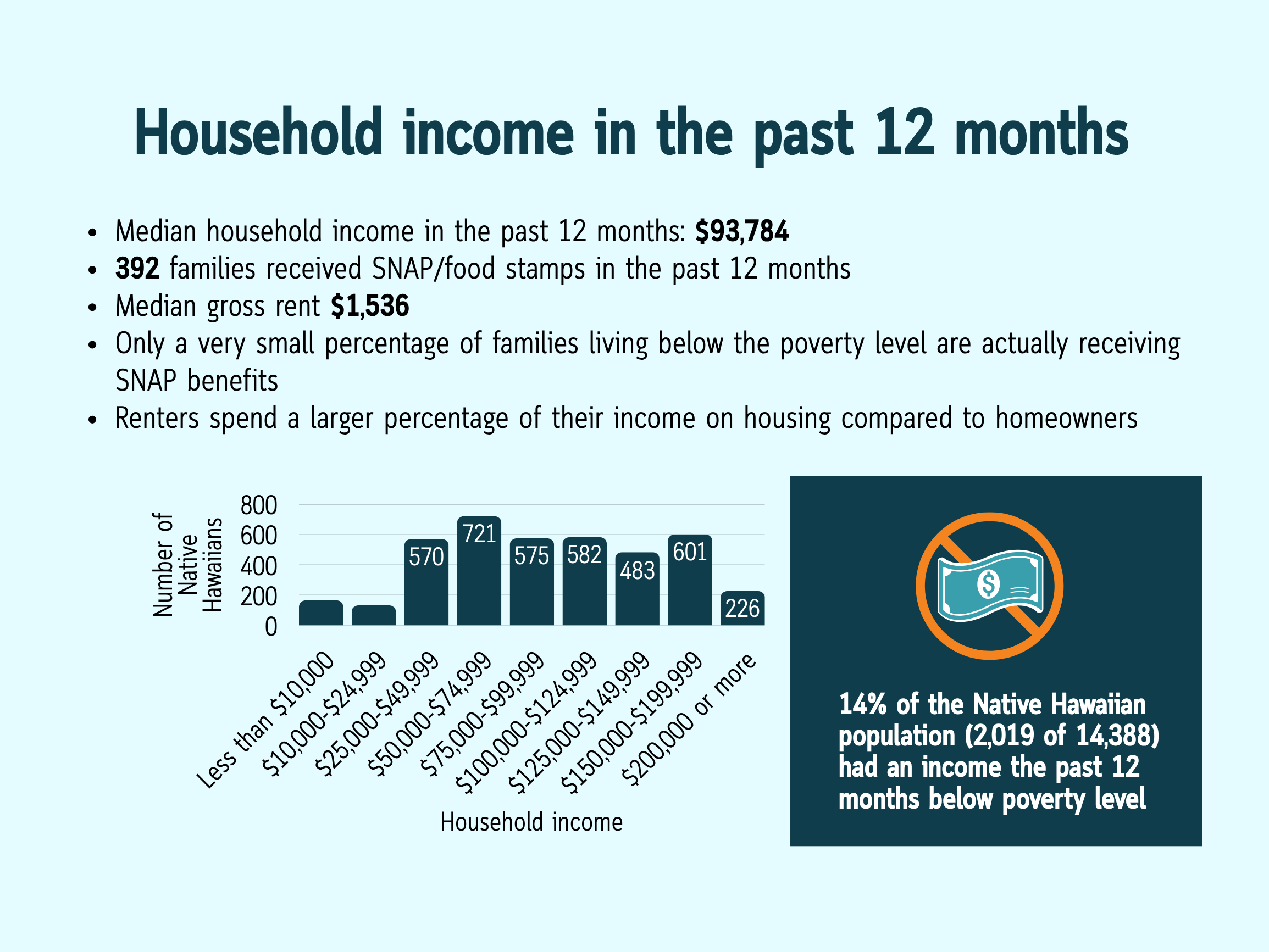
The median household income was slightly more than $93,000. Only 392 Native Hawaiian families received SNAP benefits in the past 12 months, with 14%, or over 2,000 people with an income below the poverty level. We want to point this out as only a very small percentage of families living below the poverty level are actually receiving SNAP benefits.
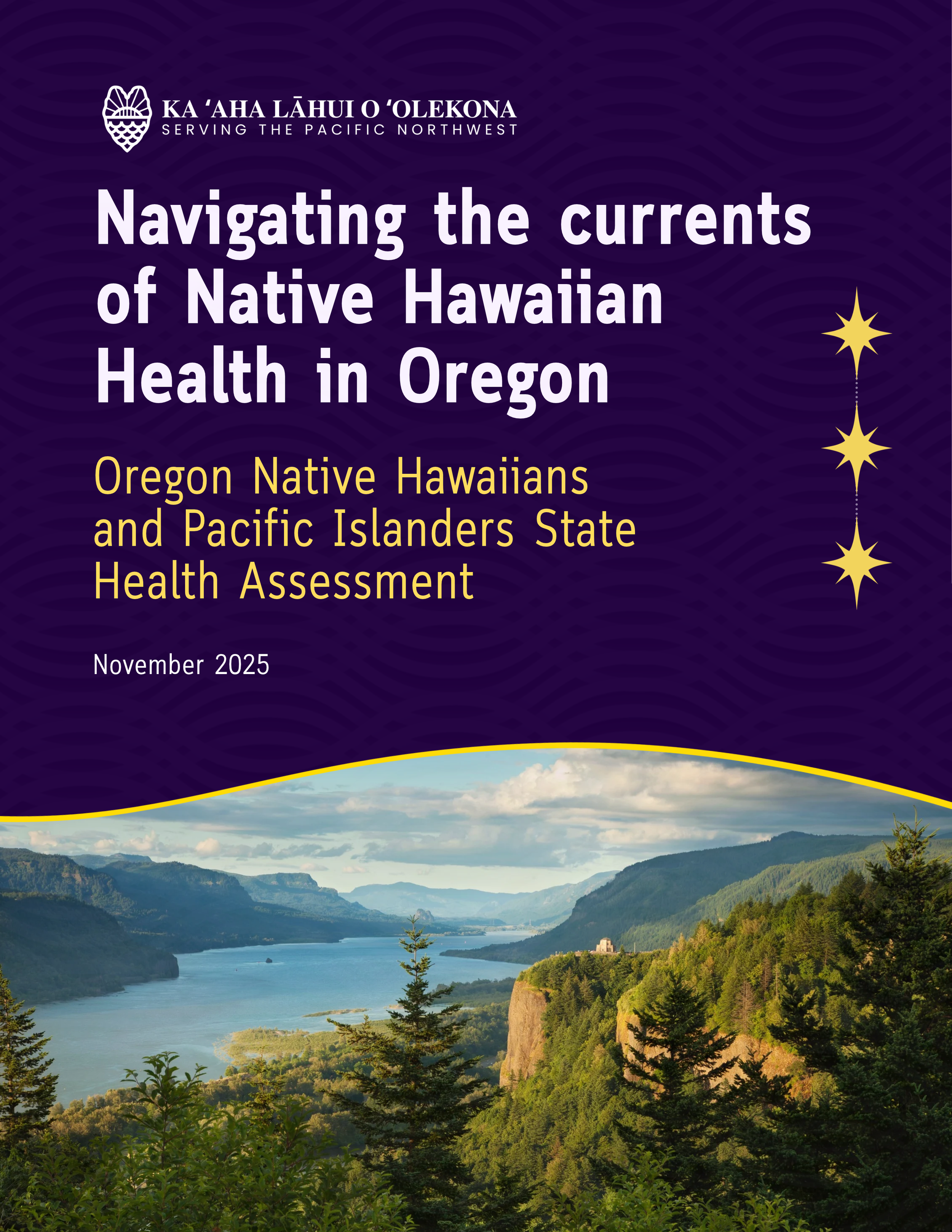
2025 Oregon Native Hawaiians and Pacific Islanders State Health Assessment
Better or Worse than the state average
Youth
Trusted adult outside of school
Effective contraceptive use among 11th grade youth
Adult Risk & Protective Factors
Poor mental health among adults
Physical inactivity outside of work among adults
Drug-use
Drug-related overdose deaths
Morbidity and Mortality data
Fall deaths among older adults
Firearm deaths
Suicide deaths
8
Better
13
Worse
4
No data
Youth
Chronic school absenteeism
Infant Mortality
Adult Risk & Protective Factors
Adverse childhood experiences among adults
Population
Dental visit among children and adults
Drug use
Binge drinking within the past month
Commercial tobacco use
Marijuana use
Chronic disease data
Diabetes among adults
HIV Infection
Syphilis among people who can become pregnant
Morbidity and Mortality data
Severe maternal morbidity
Colorectal cancer mortality
Heart disease deaths
Elevated blood lead levels among children
Safe drinking water
Heat-related illness emergency department and urgent care visits
Shiga toxin-producing Escherichia coli (E. coli) infection
Native Hawaiian Perspectives of Navigating Preventive Healthcare in Oregon
To describe preventive healthcare access and use, we share data collected from seven walaʻau (to talk, speak, converse) held at KALO. The stories from community members were summarized into the following 5 themes:
1. Reading the conditions: Understanding healthcare systems, benefits, and transitions
Overall, participants were asking for the system to be legible: clear reminders, transparent costs, and to have a steady hand through the transitions that too often reset the clock on care.
2. Wayfinding: Scheduling, wait times, and technology
Participants made it clear that getting care takes more than a phone number and an open slot — it takes time, technology, and the patience to keep pushing when the system stalls.
3. Trusting the crew: Relationships, provider trust, and feeling cared for
Trust, more than any single policy fix, determined whether participants stayed engaged with preventive care or quietly let it lapse. As a community we need to build awareness and watch the ocean — knowing unexpected waves or changes can catch us off guard, and we need to be ready to care for one another as the tides recede.
4. Relashing the canoe: Advocacy, education, transparency, and community supports
Where systems felt unpredictable, community organizations became the steadying point — the place participants could relash the canoe and keep moving forward.
5. Centering traditional knowledge: Offering pathways for traditional, holistic, and alternative preventive care
Underlying these reflections was a desire not just to be treated by the system, but to reclaim community-based ways of caring for one another that predate it.
Authorship Team
Funding for this project from the Oregon Health Authority allowed our organization, KALO, to both build capacity within our community and learn how to tell its own story. As such, KALO assembled a team, including research fellows, all of whom participated in professional development supported by this funding mechanism and were foundational to this work and the findings described in this report.
We acknowledge that this work is housed within an organization led by Native Hawaiian culture, values, and practices. As such, the interpretation of findings is primarily grounded in a Native Hawaiian perspective. We hold this perspective with care, acknowledging that Pacific Islander communities in Oregon have their own histories, leadership, and community-defined priorities that deserve distinct attention and investment. It is important to expand this work in partnership with Native American and Pacific Islander communities and organizations to better understand the needs and experiences of Indigenous people in Oregon and establish mechanisms to reduce disparities and build healthier communities.
-
I am still learning my kuleana in the world and related to this project. Currently, I see my kuleana as: to honor the knowledge shared by mentors with me and to do my best in sharing the stories of the communities I have the privilege to be a part of. I am a forever student - learning from incredible researchers, community leaders and organizers, and community and cultural protectors. Through these experiences, I am slowly putting together what I know and need to continue to learn. In this project, I see my kuleana as working with the community to find ways to advocate for the health and wellbeing of the displaced Native Hawaiian community.
-
As a Native Hawaiian visual storyteller born and raised in Waiʻanae, my kuleana is to uplift the resilience, ʻike, and impact of the Native Hawaiian communities living across the continent through intentional storytelling and creative media. Through photography, design, data visualization, impact videos, and strategic communications, I document the stories that deserve to be seen, preserve the knowledge that deserves to be carried forward, and create pathways for our communities to connect. My work bridges culture and communications, making complex information accessible to our lāhui while honoring the voices behind it.
-
Being born and raised in rural Hawaiʻi, I feel that I have been blessed with a unique upbringing that has influenced who I am today and how I view the world. The strong sense of community in my small town, and on Hawaiʻi Island as a whole, has instilled in me the kuleana to have empathy and kindness for others and to help in any way that I can. Whether back home or on the continent, my kuleana is to use my experiences and education to represent and serve the community and people that I love while continuing to be a lifelong learner and keep expanding my knowledge. I plan to continue my education with a Master’s in Public Health and eventually pursue my doctorate in order to politically advocate for my community.
-
Being raised on the continent by parents who were born and raised in Hawaiʻi from Japanese and Filipino backgrounds, it was instilled in me early on that I may not be Hawaiian by blood, but I am by heart. That the way I choose to represent myself and interact with others—whether in the classroom, sports, or in the workplace—is a direct reflection of the values and beliefs that I was raised on. Starting at KALO as the Marketing Intern and now serving as the Marketing Coordinator, it is my kuleana to give back to the community and culture that raised me by creating designs that put Hawaiʻi at its center. I am honored to be able to contribute to physical and digital media that the lāhui can wear and share with pride. The Native Hawaiian community deserves to be represented wholly, not just as a footnote in someone else’s history.
-
As a Chamorro girl living in Oregon, I feel a strong responsibility toward the indigenous Pasifika community, especially in healthcare. I recently graduated from Oregon State University with a degree in Pre-medicine and Nutrition. As someone passionate about health and healing, community and the land are at the core of our healing practices. My role here at KALO is the Community Outreach Fellow for our Research & Data team. I have the privilege of working directly with community members, talking about our communities' access to healing, and thinking about how we can start more conversations like this. I believe the best solutions can only come from talking-story with your neighbors, elders, and loved ones, along with sharing knowledge with one another. My hope is to continue to build and strengthen our community, and continue important conversations, so we can better support our Pasifika community.
-
As the hiapo of the 3rd generation in my ʻohana to be born into the Hawaiian diaspora, my perspective gives me a strong sense of kuleana to others navigating displacement, and particularly generational displacement. As an ʻohana who has long undergone feeling erased or misrepresented in data and moʻolelo, it's an honor to work among others to ʻauamo the shared kuleana of addressing these gaps within our health and education systems and uplifting the resistance of our communities. In this project, my kuleana is the administrative and logistical coordination as related to our data organization, infrastructure, and capacity.
Community Advisory Board & Kūpuna Council
-
Aloha kākou! ʻO wau no ʻo Leialoha Kaʻula a he kama au ʻo ka pae ʻāina ʻoi kelakela ʻo Hawaiʻi. Born on the island of Oʻahu, raised on Moku O Keawe, and now humbly appreciates the lands of the Atfalati tribes in hopes to uplift their stories and community. As a hula practitioner, cultural practices and the stories of our ancestors is the foundation of all that we do. These practices and protocols that have been instilled since a young age continues to guide me each and every day. As a proud graduate of Ke Kula ʻO Nāwahīokalaniʻōpuʻu, ʻŌlelo Hawaiʻi surrounds all that we do and has allowed for me to carry what has been taught to me here in the Pacific Northwest. In 1918, Prince Jonah Kuhio Kalanianaʻole founded the Honolulu Hawaiian Civic Club with a vision to engage our lāhui in the need to be civically involved in matters that impact our community. Today, the Association of Hawaiian Civic Clubs is home to over 60 chartered clubs that stretches across Hawaiʻi and Moku Honu (Turtle Island). Ka ʻAha Lahui O ʻOlekona or KALO is one of those proud organizations with a mission and a vision to carry out the work of our Prince. Living in diaspora is a challenge that so many of us are faced with and donʻt have the tools to navigate when it comes to how we can make an impact here in the Pacific Northwest. Our Aliʻi were world travelers - navigators! Here at KALO, my goal is to establish, grow, and maintain relationships within our communities here on the continent and in Hawaiʻi to ensure our lāhui, ʻohana from Hawaiʻi, and our Pacific Island communities feel uplifted, seen, and heard. WE are the IMPACT and the CHANGE for we are ALOHA. - Maikaʻi ke kalo i ka ʻohā!
This report was guided by two advisory councils: our Community Advisory Board (CAB) and Kūpuna (Elder) Council, who were established to provide guidance, cultural grounding, and center community, ensuring that this work reflects the voices and priorities of KALO’s community. Both councils function in an advisory capacity, strengthening trust and accountability while supporting KALO’s long-term vision of cultural preservation, health equity, and community empowerment.
The research team shared all findings and reports with the CAB and Kūpuna Council for their review and feedback. The CAB and Kūpuna Council members reviewed and discussed multiple drafts of these reports and provided feedback to ensure the community is reflected in alignment with their experiences. These reports were then shared with the community for their review and feedback before final publication.
Acknowledgements
We want to thank the KALO staff and community for their participation in this project and review of these reports. We particularly appreciate CAB members: Daniel Kaniho, Noelani Mengel, Pat Ribella, Kuʻuipo Yarborough, and Louise Wilmes; Kūpuna Council members: April West-Baker, Jeanette Abraham, Donna Abreu, and Laura Ribella. We also appreciate the guidance of Cece Reinig and Anita Keāʻlani Yap for their feedback on early drafts of these reports. While this report lists multiple disparities about the community, it is critical to recognize the strengths and opportunities for a community to do what they have always done - away from home.
Funding
A Community Investments in Data Collection, Infrastructure, and Analysis grant from the Oregon Health Authority supported this work. The funders provided financial support for the work on this project but did not have any role in study design, data collection and analysis, or preparation of the report. The funders did not provide any support to the CAB or Kūpuna council, nor did they provide compensation for participants. Oregon Health Authority did provide data from the Behavioral Risk Factor Surveillance System (BRFSS), Student Health Survey, and ALERT Immunization system collected from Oregonians to support the development of this report.
Links to Data Dashboard
Adults
Youth
Mahalo
“At the end of the day, this report is a reflection of YOU and for YOU!! It belongs to all the aunties, uncles, kūpuna, keiki, ʻōpiʻo, and advocates who took the time to share their moʻolelo. We owe a deep mahalo to everyone who helped collect this information, because your voices are the foundation of this whole effort.” - Aunty Louise Wilmes